
Seed ball broadcasting, also known as seed bombing or aerial reforestation, is a technique used for reforestation and ecological restoration. It involves encapsulating seeds within a mixture of clay, compost, and sometimes other additives to create small, round balls or pellets. These seed balls are then scattered or “broadcasted” over a target area, such as a deforested or degraded land, to promote plant growth and natural regeneration.
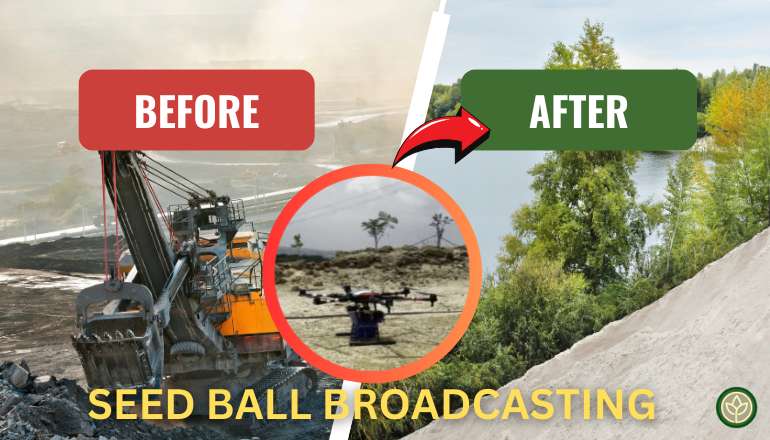
In the last decade, the marriage of cutting-edge drone technology with the ancient method of seed ball broadcasting has ushered in a new era of environmental restoration. This innovative approach promises to address deforestation, soil erosion, and habitat loss with unprecedented efficiency and precision. With ten years of experience in environmental technology, I can attest to the profound impact this technique is having on ecosystems worldwide.
The Technology Behind Seed Ball Broadcasting
Seed Balls: An Ancient Method Reimagined
Seed balls, also known as seed bombs, are small clusters of seeds encased in a mixture of clay and compost. This protective casing shields the seeds from predators, harsh weather, and provides essential nutrients for germination. This method, rooted in ancient agricultural practices, has been revitalized to meet modern reforestation needs.
Drones: The Modern Day Sowers
Drones equipped with advanced GPS and mapping technologies are transforming the way we distribute these seed balls. The process begins with high-resolution aerial surveys to assess the terrain and identify optimal planting sites. Using these data, customized flight paths are programmed, enabling drones to distribute seed balls with pinpoint accuracy across vast and often inaccessible areas.
Applications and Uses
- Reforestation and Afforestation
- Reforestation: Drones can efficiently reforest areas affected by wildfires, logging, or natural disasters.
- Afforestation: Establishing forests in barren lands is now feasible on a large scale, aiding in carbon sequestration and combating climate change.
- Erosion Control
- Distributing seed balls in erosion-prone areas helps stabilize the soil and prevent further degradation, promoting vegetation that anchors the soil.
- Habitat Restoration
- This method is crucial for restoring habitats for wildlife, particularly in regions where manual planting is impractical.
- Urban Greening
- Urban planners are using drones to green cityscapes, planting trees and shrubs in hard-to-reach areas to enhance urban biodiversity.
Pros of Seed Ball Broadcasting via Drones
- Efficiency and Speed
- Drones can cover extensive areas much faster than manual planting, reducing the time and labor required for large-scale projects.
- Accessibility
- They can reach remote or difficult terrains, such as mountainsides or wetlands, which are often inaccessible to human planters.
- Cost-Effectiveness
- While the initial investment in drone technology can be high, the reduction in labor costs and the increased planting success rates make it a cost-effective solution in the long run.
- Precision
- Advanced GPS and mapping technology ensure that seed balls are distributed in optimal locations, increasing germination rates and overall project success.
Cons and Challenges
- Initial Costs
- The upfront costs of purchasing and maintaining drones, along with the necessary software and training, can be prohibitive for smaller organizations.
- Technical Issues
- Drones are susceptible to technical failures, weather conditions, and require regular maintenance to ensure operational efficiency.
- Seed Selection
- The success of seed ball broadcasting heavily depends on selecting the right seeds for the environment. Poor seed choice can lead to low germination rates and failed restoration projects.
- Regulatory Hurdles
- In some regions, the use of drones is heavily regulated, requiring permits and adherence to strict guidelines, which can slow down project implementation.
Looking Ahead: The Future of Environmental Restoration
The integration of seed ball broadcasting and drone technology represents a significant leap forward in our efforts to restore and preserve natural habitats. As technology continues to advance, we can expect even greater improvements in precision, efficiency, and effectiveness. Innovations such as AI-driven data analysis, automated drone fleets, and biodegradable seed ball coatings are on the horizon, promising to make this method even more impactful.
In conclusion, while there are challenges to overcome, the benefits of using drones for seed ball broadcasting far outweigh the drawbacks. This method holds immense potential for large-scale reforestation and habitat restoration, offering a sustainable solution to some of the most pressing environmental issues of our time. As we refine and expand this technology, the vision of a greener, more resilient planet is becoming an achievable reality.